The Low-Dose Studio: A 20-Minute Cannabis Ritual for Creative Flow
Creativity is a shy animal. It rarely shows up because you demanded it, and it definitely does not arrive on a schedule. For plenty of adults, a small amount of cannabis can soften the edges of a creative session—quieting the inner editor just enough to let a rough idea breathe. But the key word is small. The difference between a useful creative nudge and a foggy hour of staring at the ceiling is usually dose, setting, and expectation.
At MarijuanaSpan, we are not here to sell cannabis as a genius potion. Think of it more like lighting: a slight change in the room can help you see your work differently. It will not write the poem, paint the canvas, or fix the plot hole. It can, however, make the first ten minutes of showing up feel less like a confrontation.
First, Retire the Magic-Puff Myth
The old story says one hit opens the creative gates. For some people, maybe. For most mindful adult consumers, especially in midlife or after a long break, a strong dose is more likely to produce a fog of second-guessing, a dry mouth, and a sudden urgent need to reorganize the spice rack.
Cannabis can affect working memory, timing, and attention. That is not always bad for art—loose associations can be useful—but it is a poor match for tasks that require precision, editing, or remembering where you put the notebook. The goal is not to get high and hope for genius. The goal is to create a gentle shift in sensory filter, then get to work.
The Creative Sweet Spot Is Smaller Than You Think
For a creative session, less is almost always more. A sensible starting point for a low-tolerance adult is 1 to 2 milligrams of THC, ideally with some CBD in the mix. If you already use cannabis regularly, 2.5 to 5 milligrams may be your ceiling for focused creative work. This is not a competition. It is a studio practice.
Edibles are slow and sneaky. Wait at least 90 minutes before deciding you need more, and honestly, do not decide that during the same session. Inhaled cannabis acts faster, but one or two puffs is usually plenty for a short creative window. A low-dose tincture can be easier to measure, especially if you are the kind of person who likes a spreadsheet. Keep CBD nearby. If you tip past your comfort zone, CBD will not erase the THC, but it can take the edge off for some people.
A few guardrails help. Stay home or in a familiar studio. Skip alcohol. Do not drive. Put the phone in another room. Set a timer before you start. And write down the dose, time, and what happened—not to be clinical, but because your memory is a unreliable narrator, especially when cannabis is involved.
Shop for the Session, Not the Sticker
Strain names are marketing more than science. Labels are inconsistent, harvests vary, and your friend's favorite sativa may make you want to hide under the desk. A better approach is to look for terpenes and cannabinoid ratios that match the job.
For creative sessions, many people lean toward citrus-forward and piney profiles. Limonene often reads as bright and upbeat. Pinene can feel alert and clear. Terpinolene brings a lively, slightly psychedelic lift for some consumers. Heavier myrcene and linalool profiles may be better saved for evenings, when the goal is winding down rather than making something new.
A few practical directions: a citrus-forward hybrid in a low-dose vaporizer, a 1:1 THC-to-CBD gummy, or a mild tincture with a limonene-rich profile. Strain suggestions like Jack Herer, Durban Poison, or a balanced Blue Dream can be starting points, but treat them as loose inspiration. Ask your budtender for the terpene label, not just the THC percentage. A 12% flower with a profile you like may serve you better than a 30% flower that flattens your afternoon.
The 20-Minute Creative Ritual
This ritual works best with a fast-acting product, like inhalation or a quick-onset beverage. Edibles are better for longer, looser sessions—not a 20-minute sprint. Adjust the timing to your body and your product.
Minutes 0 to 2: Clear the runway
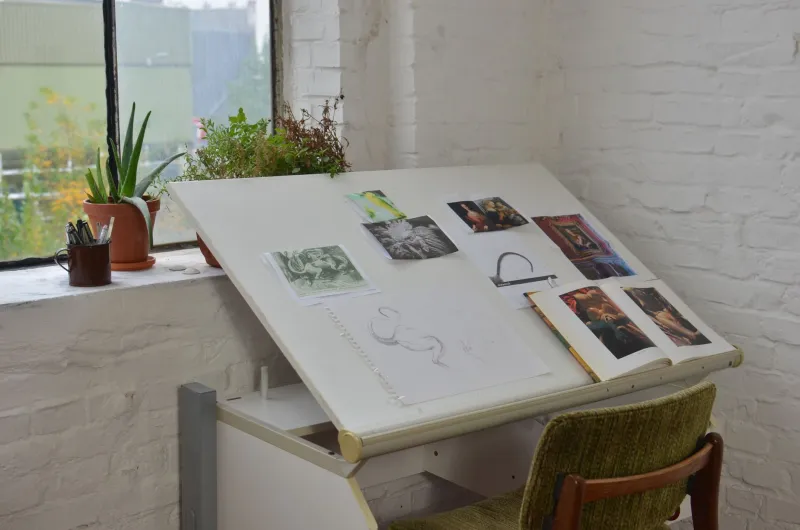
Put your phone away. Clear the desk enough to work. Fill a glass of water. Set out the one tool you need: notebook, sketchbook, guitar, camera, or laptop. Do not open twelve tabs. The point is to reduce friction.
Minutes 2 to 5: Take the dose
Choose your low dose and record the time. If you are inhaling, take one small puff and wait ten minutes before even thinking about another. If you are using a tincture, measure it. If you are using an edible, remember that the session clock starts after onset, not after swallowing.
Minutes 5 to 15: Transition without scrolling
Stretch. Look out a window. Read one page of something unrelated. Doodle a bad shape. Hum a song. This is the sensory warm-up. Scrolling is not a warm-up; it is a robbery. If you feel anxious, stop, drink water, and take a short walk. Do not add more THC to fix a THC problem.
Minutes 15 to 20: Make something imperfect
The rule for this window is simple: no editing. Write the ugly sentence. Paint the wrong color. Record the half-formed melody. You are not making a masterpiece. You are making evidence that you showed up. When the timer goes off, stop. Jot one note about what felt easy and what felt sticky.
When Cannabis Is the Wrong Tool
Some creative blocks are not dosing problems. They are fatigue, grief, burnout, or a project that needs a break. Cannabis will not fix those. It also is not appropriate for everyone. If you have a history of psychosis, severe anxiety, or a heart condition, or if you are pregnant or breastfeeding, skip it and talk with a health care provider. Check your state laws, keep your stash locked away from kids and pets, and treat cannabis like what it is: a legal adult product with real effects, not a personality trait.
A Gentle Closing
The most useful creative tool you own is still the timer. Cannabis, at a low dose, can be a pleasant accessory—a way to make the studio feel a little more inviting. It cannot promise flow. It can only help you sit down. For mindful adults, that is more than enough reason to keep the dose small, the expectations light, and the notebook open.