Beyond the Percentage: How to Shop Cannabis With Your Nose
Walk into any dispensary in the country and you'll see the same thing: a menu arranged around a number. Thirty-one percent. Twenty-eight. Thirty-four, if someone's feeling bold. The implicit message is that higher is better, and that everything else on the label is decoration.
Ask a budtender who's been at it a while what they actually reach for, and you'll usually get a different answer — something closer to "this one smells like a pine forest and it's 19%."
That's not a nostalgia thing. It's a shopping strategy. Here's how it works.
What Terpenes Are, Without the Chemistry Lecture
Terpenes are the aromatic compounds that give plants their smell. They're in lemon peels, rosemary, hops, lavender, black pepper, and — yes — cannabis. There are hundreds identified in the plant, and they exist alongside cannabinoids like THC and CBD.
The practical takeaway: two strains with identical THC numbers can feel completely different, and a chunk of that difference is usually attributed to the terpene profile — plus the specific mix of cannabinoids and the individual human doing the consuming. Scientists are still working out exactly how much of the difference terpenes are responsible for on their own. What's not really in dispute is that scent is a fast, free, remarkably reliable source of information about a specific batch of flower.
Why Your Nose Beats a Number
A lab-tested THC percentage tells you the theoretical maximum strength of a sample. It doesn't tell you how fresh the flower is, how it was stored, how it was cured, or whether it will feel like what you're hoping for.
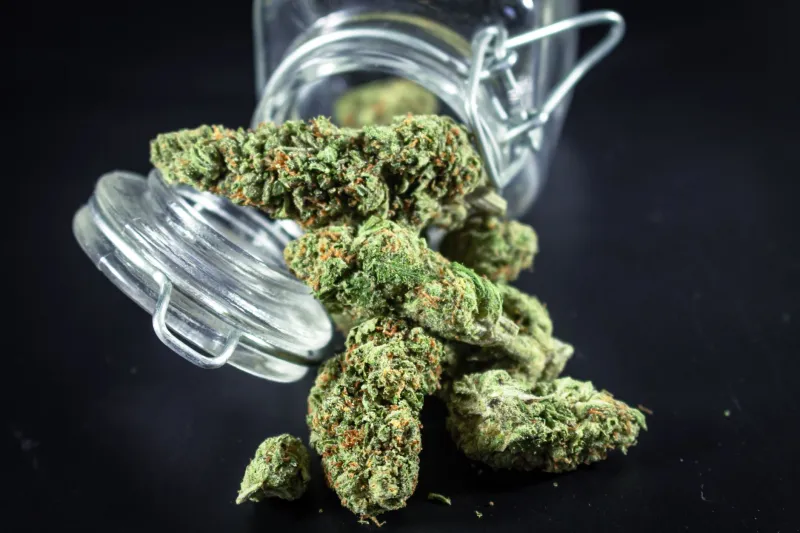
Your nose does some of that work for you. Aroma is a freshness indicator. Terpenes are volatile — they evaporate. Flower that's been sitting in a warm back room for eight months in a plastic jar tends to smell like hay, cardboard, or nothing at all. That's useful information the percentage doesn't give you.
Scent also connects to memory and mood in ways that are genuinely powerful. If a particular aroma has consistently corresponded to the experience you want — relaxed, focused, social, sleepy — that's a better predictor than a number that varies batch to batch anyway.
The Aroma Families Worth Knowing
You don't need to memorize a chart. Learn a handful of families and you'll be able to navigate most menus.
- Earthy, herbal, musky (myrcene-forward). Think mango, thyme, wet forest floor. Often associated with heavier, more sedating experiences.
- Citrus (limonene-forward). Lemon, orange peel, grapefruit. Frequently described as bright, heady, and mood-lifting.
- Pine (pinene-forward). Literal pine needles, sometimes with a rosemary edge. Often associated with alertness and clear-headedness.
- Floral, soft (linalool-forward). Lavender, rose, a hint of soap. Commonly linked to calm and body ease.
- Peppery, spicy (caryophyllene-forward). Black pepper, clove, cinnamon bark. Often described as grounding and warm.
- Fresh, green, almost tropical (terpinolene-forward). Tea tree, lilac, a slightly resinous tang. Tends toward the lively, energetic end for many people.
- Hoppy and woody (humulene-forward). Beer-adjacent, herbal, sometimes a touch savory.
A caveat, and it's an honest one: individual response varies a lot. The person who swears by pine for focus and the person who finds it racy are both describing real experiences. Treat effect descriptions as a starting hypothesis, not a guarantee.
A Routine for the Dispensary Counter
- Name the experience first. "I want something for a Saturday afternoon walk" is far more useful than "what's your strongest."
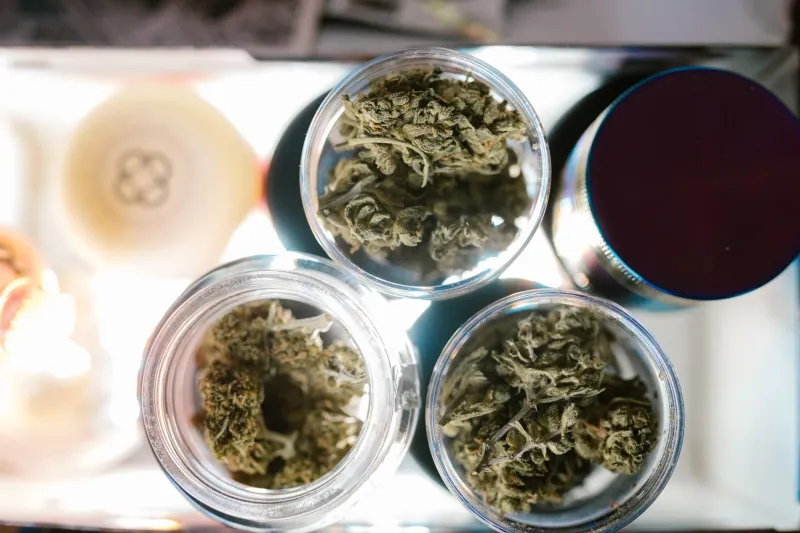
- Ask to smell before you buy. Good shops let you. A crushable sample jar or a sniff jar is standard.
- Smell two or three at a time, then pause. Your nose fatigues quickly. Coffee beans are a myth — just step away and reset for a minute.
- Compare the same strain across brands. If one version smells vibrant and the other smells like a basement, you've learned something.
- Check the harvest date if it's printed. Recent is better. Always.
- Try small before committing to an ounce. Buy an eighth. Buy a pre-roll. Keep notes on aroma and experience.
Questions Worth Asking a Budtender
- "What's the freshest flower you have right now?"
- "Which of these has a terpene panel I can look at?"
- "I'm looking for something pine-forward but not too strong — what would you suggest?"
- "Is this line flower or a blend? Is it the same grower as last time?"
- "Do you have anything with the same aroma profile as [strain you liked] but lower THC?"
- "Are the terpenes in this vape cannabis-derived or botanical?"
- "What do you personally reach for, and why?"
That last one is worth more than any label. Budtenders who are paying attention will tell you about smell and freshness, not just numbers.
Red Flags for Overhyped Terpene Claims
Terpenes have become a marketing word, and marketing words get stretched. Watch for:
- Flower claiming unusually high terpene percentages. Total terpenes in dried flower typically sit in the low single digits. If a label boasts something like 8% on plain flower, ask for the certificate of analysis.
- "Terpene-infused" products with no numbers. Added terpenes are common in vapes and concentrates. Botanical terpenes (from other plants) are legal and sometimes fine — but they're not the same as what's in the flower, and they can be harsh at high levels.
- "Indica means this, sativa means that" with total confidence. Those labels are a rough classification convention, not a reliable effect map. Terpene profile and chemistry tell you more.
- Vague phrases like "proprietary terpene blend." Ask what's in it. If nobody can tell you, that's your answer.
- Smell that's almost too loud. Aggressively perfumed flower can indicate added fragrance. Real flower smells like a plant, not a candle.
- No testing information at all. You're allowed to want a certificate of analysis. Ask.
Comparing Products Without Chasing the Percentage
A simpler framework: hold the THC number roughly constant and vary everything else. Pick two strains in a similar range — say 18% to 22% — with different aromas. Try them on separate days and note how each felt. That's a far better education than buying the highest number on the shelf and wondering why it felt flat.
Also worth knowing: very high-THC flower can be a less pleasant experience for a lot of adults, not a better one. It's a common story — the 33% jar that felt anxious and foggy, and the 19% jar with a bright citrus nose that felt exactly right.
The Takeaway
The percentage on the label is a small piece of the picture. Your nose, the harvest date, the terpene panel, and a few good questions will get you a lot closer to the experience you actually want — and you'll spend less money figuring it out.
Next time you're at the counter, start with "can I smell that?" instead of "what's the strongest?" You'll be surprised how quickly the menu starts making sense.